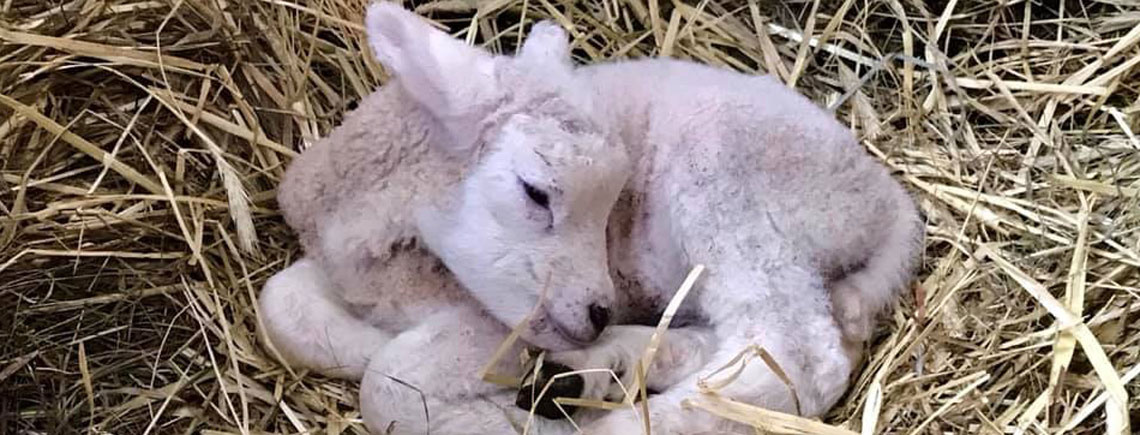
Baby Animals
Spring is a time for rebirth and the region is now welcoming a whole new crop of little citizens—tiny animals and birds just opening their eyes to the world’s wonders. For most of us, no matter how old we become, we never cease to wonder at these tiny miracles and enjoy observing their antics.
There are several places in the region that we can come in contact with the little creatures. For those wishing to visit a real working farm, Peter and Melissa Martin’s Dandelion Farm, located at 204 Hulett Road in Sheffield, is just the ticket. For the Martins, it begins and ends with kids. Three decades ago, they introduced their own children to goats and have never looked back.
“At first we were a hobby farm with goats for our own children,” said Melissa as she stuffed hay into the animal’s feeders on a cold morning this week. The goats clustered around to greet her, pushing their heads over the side of their pen, nuzzling at her and pulling mouthfuls of hay out of her offerings.
The early hobby farm soon grew into a business and today Dandelion Hill Farm raises purebred Nubian goats as well as Kiko meat goats, Icelandic sheep and chickens for eggs and meat. The busy couple also grows seasonal vegetables and flowers for sale.
But spring is baby time. Their nursery barn, currently filled with 12 kids, is visited each year by another kinds of kids—human children—who come to see the baby goats. Ten infant goats are in the couple’s “romper room” right now where they have regular contact with the Martins.
“They will all be sold as pets or as milk goats,” Melissa said. “We have lots of contact with them so they will be friendly. Two have already been sold and will go to a horse farm to be companions animals.”
The kids cluster around her legs as she enters the stall, hopeful of being fed. In a neighboring stall are two more babies, cuddled up with their mom. Only two days old, they were still adjusting to this world. All the babies are separated from their mothers soon after birth but each is fed his or her mother’s milk daily.
“It makes it easier to regulate the mother’s milk,” Martin explained, “and to see how much milk each doe is giving.”
The Martins run a seasonal dairy, selling goat milk and raw goat cheese. “I will start selling milk when I have all the babies up and running,” she said.
In addition to raising and selling milk goats, whose milk is easier to digest than a cow’s, the Martins rent goats out to landowners who are struggling with invasives. “Goats are not grazers, they are browsers,” she said. “They will eat bayberry, multiflora rose, bittersweet, weeds, poison ivy … anything.”
Her own goats all have individual names—Greta, Marigold, Mercy and the like—and each displays an individual personality but she admits that “raising goats can be hard.” Curious and mischievous, goats are funny, sociable animals but are sometimes destructive. “They are curious and will get into everything. I tell people to watch their trees—they stripped the bark from my apple tree last week and I guess I will have to replace it,” Martin said.
“We never sell a goat alone,” she added. “They are social animals and you have to have at least two.”
Martin said that she welcomes visits to the farm by appointment and will do farm tours. To reach the Martins, call 413-429-7898 or email: melissadandelion@gmail.com.Winter store hours are hours Thursday, 10AM -1PM, Friday and Saturday, 10 AM-12 noon.
It’s hard to imagine anything cuter than a baby goat but, if there is a more appealing infant, perhaps it is the liquid-eyed alpaca crias. These cute and cuddly infants can be seen later this spring and summer at Copper Star Alpaca Farm in Ancram, NY which sells alpacas, raw fiber, socks and gloves.
“We do allow farm visits by appointment,” said Barbara Crocco, who owns the farm with her husband, Joseph. “Crias (baby alpacas) are adorable. We are expecting our 2022 cria arrivals to begin in May and continue through to October—about 20 to 25 are anticipated.”
The Croccos have owned alpacas since 2007. They are not farmers by tradition—he is an architect—but he said his wife saw the cute face of an alpaca in a magazine and was immediately smitten.
The farm does sell animals to those looking for a non-kill farm animal but he hastens to say that they are not pets. “The more you handle them, the friendlier they will become,” he said, “but they are kind of catlike and a little stand-offish. They are pack animals. We have a number of city people who have moved here during Covid and they have purchased them and like to take walks with them.”
That said, they all have individual personalities and Crocco said “we have a few who are real PR animals.”
Usually alpacas are kept for their coats. “We breed for the quality of their fiber,” he said. “A lot of home spinners and crafters have made a good business with a few animals.”
He said he would not recommend having fewer than three animals at a time. “They will mourn the death of a cria or a mate,” he said. “You wouldn’t want an alpaca alone.”
The farm is home to more than 200 alpacas, all carefully bred for superior genetics. The farm focuses on Huacaya, one of the two breeds that make up the species Lama pacos. Animals of the Huacaya breed have a rounded and bulky appearance.
Some towns do not allow farm animals in residential areas but the farm has a solution for residential clients. “If you or your family love alpacas—and really who doesn't—but your residence is not zoned for livestock, you can adopt an alpaca from us,” their website advises. For a $20 monthly fee, adopting an alpaca provides all the pleasures with none of the day-to-day responsibility. Patrons can visit the farm to take their animals for a walk, learn husbandry and observe shearing time.
“Pick an alpaca from our herd and you will receive his or her fleece after shearing,” they say. “You can have your alpaca's fleece processed at a local mill for yarn or you can create your own designs by felting or spinning.
The fee includes two visits per month of up to two hours per visit. Visiting hours are by appointment only. Call 518-291-5100 to schedule a time or go through the farm’s Facebook page/Messenger, Copper Star Alpaca Farm.
Want a more general visit with baby animals? Hancock Shaker Village in Pittsfield MA returns with its 20th annual Baby Animal Festival April 16th-May 8th.
Visitors can meet the village’s newest farm babies—lambs, piglets, calves, chicks and kids and partake in daily events and village-wide activities. There are daily Livestock 101 talks with the farm team, blacksmithing, woodworking, dyeing, spinning and weaving demonstrations plus, on weekends, pony rides and face painting.
Want some time with the baby animals before the Village opens? Book a Behind the Scenes Tour, offered daily at 10 AM during the festival. A wagon hayride provides transportation during the hour-long tour.
The tour takes visitors to see the animals in the Round Stone Barn, Dairy Ell and barnyard. Visitors will be able to pet some of the animals and sometimes even bottle-feed a calf.
After the tour they are welcome to re-visit the barn and explore the rest of the Village which opens to the general public at 11AM. Only one tour will be given each day to a single group of up to 20 people. Tickets must be reserved in advance and sell-out fast.
The village is open 11AM-4PM daily; check at the ticket desk for details. Please click the link below for further information.