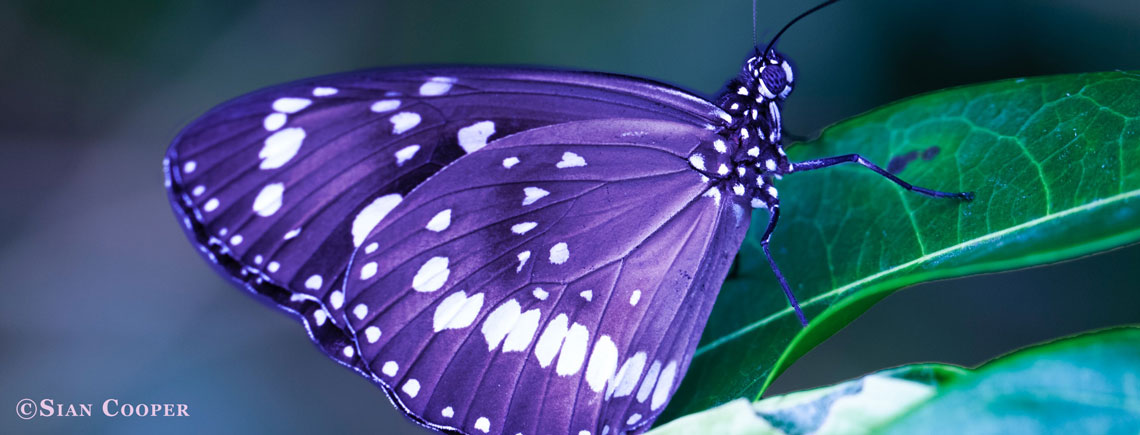
Native Pollinators
Cement, plastic, glass and steel. Systematically we seal ourselves away from the real world in climate-controlled boxes, covering the earth with impermeable surfaces and blithely destroying natural habitats. But at what price?
As our world heats up and we begin to reap the rewards of our interventions into the environment, more attention is being paid to the natural rhythm of nature and to the benefits of listening to it. On four Fridays this June the Osher Lifelong Learning Institute of Berkshire Community College in Pittsfield MA will present Honoring Our Indigenous Heritage: Native People, Plants, Pollinators,, a look at a more harmonious way of interacting with nature.
“This is not a course about pollination,” said Vivian Orlowski, program director of the Housatonic Heritage Operation Pollination Program and chair of the Great Barrington Agricultural Commission. “It’s about redefining a relationship with plants and pollinators. In this course we’re not being a specialist at all in plants or indigenous history, what we’re trying to do is weave them all together to help us appreciate and shift our viewpoint.”
She referred to Robin Kimmerer, author of Braiding Sweetgrass: Indigenous Wisdom, Scientific Knowledge and the Teachings of Plants. “ She actually introduced new pronouns to recognize that other creatures and plants are living beings and not the same as a hammer or a table,” Orlowski said. “That’s what we try to convey in the introduction to this course.”
Orlowski said that her own interest in Native Americans and their lifestyle was piqued when, as a child on a trip with her parents, she first learned about the brutal removal of the Cherokee people from their lands in the Southeastern United States to Oklahoma.
“The story of the Mohican people (who are indigenous to the tristate region) is not so dramatic but it is still the same story,” she said. “They were forced to move twice—first to New York State and then to Wisconsin. I was inspired to create this course by the work being done on the Housatonic Heritage Area’s Native American Heritage Trail and in Stockbridge.”
Orlowski has lined up four presenters for the online classes. “The course is bio-diverse just like the message,” she said.
The first class, Restorative Approaches to Native American Medicine and Guidance on Nature Trail Interpretation, will be presented June 3rd by Dr. Margaret Bruchac, an associate professor of anthropology at the University of Pennsylvania and its coordinator of Native American and Indigenous Studies, as well as a consultant to various well-known New England museums. She is of Abenaki descent.
“Dr. Bruchac has done a lot of work interpreting the role of 19th-century doctors who used herbal medicines because, at that time, the medical profession didn’t have much to offer,” said Orlowski. “She will also talk about the guidelines for the interpretation of the John Lambert Trail.”
The second class, Identifying Native Wild Edibles and Medicinal Plants in the Berkshires, will be presented June 10th by Russ Cohen, formerly River Advocate in the Division of Ecological Restoration for the Massachusetts Department of Fish and Game. Cohen has offered wild edible walks and talks for more than 45 years and is recognized as the region’s leading wild edibles expert. He is now using his nursery to grow 1,000 plants, representing more than a third of the more than 180 species edible by people and native to New England ecoregions. He is the author of Wild Plants I have Known … and Eaten.
“Russ became fascinated with wild edibles as a teen,” Orlowski reported. “He had a teacher who was teaching an after-school course in wild edibles and he just immersed himself in the library reading about the plants we could eat. The next year he was asked to lead the course and ever since then he has been giving these courses as a volunteer.”
She said that in 2015 Cohen developed his native plant nursery. “Russ incorporates a lot of recipes in presentations,” Orlowski said.
In addition to his class, Cohen will offer a guided walk along the Lambert Trail at the BCC campus on September 15th.
The third class on June 17th also deals with edible plants but this time for medicinal purposes. Misty Cook, who grew up on the Stockbridge-Munsee reservation in Wisconsin, will present Medicine Generations: Natural Native American Medicines Traditional to the Stockbridge-Munsee Band of Mohicans. Cook, who is certified as a tribal medicine woman, is author of Medicine Generations which documents 58 Native American herbal medicines passed down through her Wolf Clan Medicine people and through tribal stories.
“Her book is based on extensive interviews with family elders,” Orlowski said. “These are people living under simple conditions who are living into their nineties and early hundreds. They were poor with little access to modern medicine and relied on native plant medicines. Part of the course will be to find what is still growing and to integrate that into signage along the Lambert Trail so people can do self-guided walks and appreciate these plants and recognize the value they have.”
The final class on June 24th will be Native Plant/Pollinator Interactions with Evan Abramson, founder of Landscape Interactions. Since 2019 Landscape Interactions has been responsible for the installation of nearly 300 acres of habitat in the Northeast, specifically targeting at-risk bee and lepidoptera species. He is the author of numerous publications, including the Great Barrington Pollinator Action Plan.
“Seventy-five to eighty percent of our ecosystem depends on pollinators,” said Orlowski. Pollinators can be bees, butterflies, bats, some flies … . Of course, the most charismatic is the honey bee. A lot of farmers actually import hives of honey bees so they are associated with a lot of our favorite foods. But they were imported into this country so that focus is overly emphasized and shouldn’t be seen as the whole picture.”
She reported that most native bees are solitary, living in the stalks of plants or as ground nesters. “Even the simplest things, like not cutting down the stalks of flowers once they have passed, can help them,” she said. “The concept of keeping our landscapes as an extension of the interior of our houses is not always appropriate. Let the stalks stay so solitary bees can use them for over-wintering.”
Abramson will also conduct a walk along the Lambert Trail on September 10th. He asks participants to bring smart phones and to learn about the Beecology app on YouTube developed by Dr. Robert Gegear of UMass-Dartmouth.
“He started the Beecology Project to help identify wild bees and to help people distinguish between bees,” Orlowski said. “These bees have different roles in ecology. We should be thinking of pollinators systems and the interactions between pollinators and plants.”
She explained that some of the plants being grown in so-called pollinator gardens are recommended for bees that are “generalists” and that are already doing quite well. “The ones that are fading fast are the specialists, who are much more limited in terms of food sources. We need to fine-tune our understanding of what they need,” she said. “After all, we are the ones who plant gardens, we are the ones who use pesticides. We all interact and that interaction is something that is missing even from people who care about these things.”
Orlowski will give an introductory presentation . May 31st, there will be an overall presentation on Operation Pollination to the Massachusetts Pollinator Network, whose monthly meetings are open free of charge to all interested in pollinator protection. At that time, in honor of National Pollinator Work, Abramson will present his course on Native Plant Pollinator Interactions free of charge. Register here.